
How Upper-Body Exercises Support Pelvic Floor Recovery After Pregnancy Loss

When most people think about healing their body after pregnancy loss, their mind goes straight to the pelvis. Pelvic floor, core, hips — the “lower” part of the body usually gets all the attention. And while these areas absolutely matter, there’s a huge part of pelvic recovery that often gets overlooked:
your upper body.

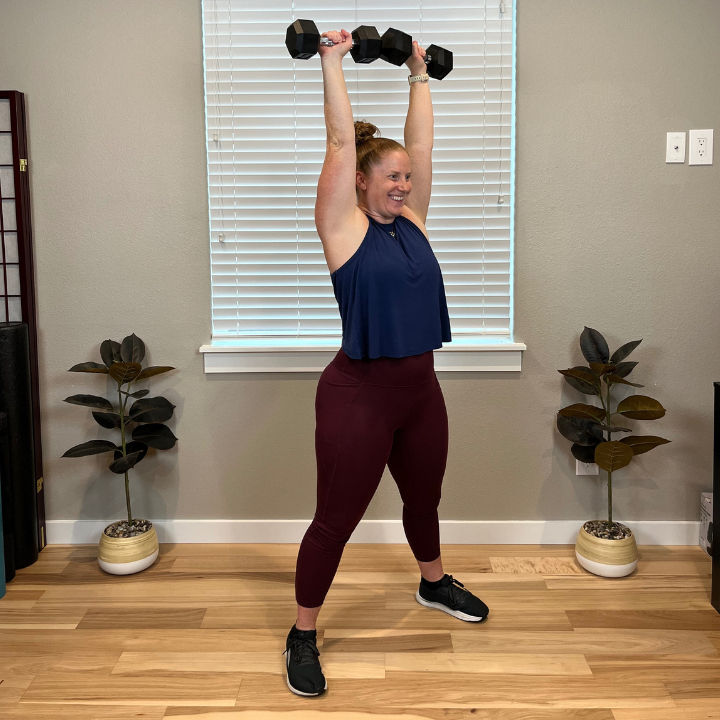
Yes — your shoulders, rib cage, and breath mechanics play a major role in how your pelvic floor functions. And one of the most supportive movements for reconnecting these systems is a simple strength exercise: the overhead press.

Whether you’re lifting dumbbells, light household items, or just moving through the motion with no weight, this exercise can help your pelvic floor heal in ways most people don’t expect.
Let’s break down why upper-body work matters so much during pregnancy loss recovery.
1. Your upper body influences your breath — and your breath influences your pelvic floor
After pregnancy loss, many women hold tension in their shoulders, chest, and rib cage without realizing it. Grief changes the way you breathe. Stress causes shallow chest breathing. And when the ribs stay stiff and closed off, the pelvic floor loses the natural rhythm it’s supposed to have with each breath.
The overhead press helps restore that rhythm.
Reaching upward encourages the rib cage to expand, improve mobility, and open the diaphragm. When you can breathe more fully, the pelvic floor can finally relax and contract the way it’s meant to — instead of staying tight, guarded, or overactive.
In other words:
Better breathing = better pelvic floor function.

2. Upper-body strength supports posture, which protects the pelvic floor
During grief, our posture often shifts without us noticing. Shoulders round forward. The chest collapses. The spine stiffens. These changes aren’t just emotional — they directly affect how the pelvis and pelvic floor are loaded.
A collapsed posture places extra pressure downward into the pelvic floor.
An overly rigid posture can create tension throughout the core.
Neither allows the pelvic floor to function in a healthy, coordinated way.
The overhead press helps lift and open the chest, strengthen the mid-back, and create a more supported, balanced posture. This top-down support allows the pelvis to find neutral alignment again, easing strain on the pelvic floor.

3. The overhead press teaches core–pelvic floor coordination
After pregnancy loss, the core and pelvic floor often feel disconnected or unpredictable. Some women feel too loose. Others feel too tight. Many feel both at different times.
A slow, controlled overhead press is a powerful tool to rebuild this coordination.
When you exhale gently as you press overhead, the core engages in a supportive, reflexive way — not forced or braced. When the ribs stay soft and mobile, the pelvic floor responds naturally instead of getting overwhelmed by pressure.
This creates a safe environment for the pelvic floor to relearn how to support you without pain, fear, or tension.
4. Upper-body tension shows up after loss — and movement helps release it
Loss settles into the body in surprising ways. Many women I work with notice:
Shoulders that feel heavy
Neck or upper back tightness
A sense of “holding everything in”
These protective patterns are normal — but they can also interfere with healthy pelvic function.
The overhead press helps break up this tension gradually and safely. It encourages openness instead of guarding, movement instead of bracing, and strength instead of collapse. Releasing upper-body tension often leads to better pelvic floor relaxation, which is essential for healing after loss.

5. Upper-body strength supports everyday life — which supports emotional recovery
Pregnancy loss affects more than the body — it affects confidence, energy, and the way movement feels day to day. Strengthening the upper body helps you feel more capable lifting groceries, carrying things, navigating daily tasks, and reconnecting with your physical identity after loss.
When your body feels stronger and more supported, your mind often feels a little steadier too.

How to start using overhead press during recovery
Start light with light resistance
Move slowly with your breath
Focus on rib mobility, not how high or heavy you press
Stop if anything feels painful or overly emotional
Connect with a pelvic PT if you’re unsure what’s safe
Healing isn’t linear, and it isn’t about pushing through. It’s about reconnecting with your body in a way that feels supportive.

Movement can be a powerful part of healing after pregnancy loss
Your pelvic floor does not heal in isolation. It’s part of a whole system — one affected by breath, posture, rib mobility, stress, grief, and strength patterns throughout your body.
Upper-body exercises like the overhead press help restore that system gently and effectively.

If you’re feeling unsure how to return to exercise after pregnancy loss, I can help you find movements that feel safe, supportive, and grounded in your healing. Reach out or comment “strong” or reach out for a free consultation so we can walk through this season together.
Navigating womanhood and it’s not something you should have to do alone. I work with women across many seasons, including pregnancy, postpartum, pregnancy loss, infertility, trying to conceive, and those living with hypermobility or Ehlers-Danlos Syndrome. My approach blends education, movement, and individualized care so you feel informed, supported, and confident in your body again. If this post resonated with you, feel free to share it with someone who might need it. With advanced training in women’s health, pregnancy and postpartum fitness, and hypermobility-informed care, I help answer the questions that are often dismissed or left unanswered and guide women toward movement that truly meets them where they are.
Thanks!
-Stay Strong.
Jessica Shiyomura, PT, DPT
Enhanced Physical Therapy & Wellness


Comments