
What to Expect from Physical Therapy for EDS (It’s Probably Not What You Think)

If you’ve been diagnosed with Ehlers-Danlos Syndrome (EDS), or even just suspect you’re hypermobile, you may feel unsure about starting physical therapy.
Maybe you’ve heard mixed things. Maybe you’ve tried PT before and it didn’t go well. Or maybe you’re worried it’s just going to be a lot of stretching and generic exercises that don’t actually help.
All of that is valid.
But physical therapy for EDS should look very different than what you might expect.
It’s Not About Stretching More
One of the biggest misconceptions is that physical therapy is all about improving flexibility.
For people with EDS, that’s usually the last thing you need.
In fact, too much stretching can often make symptoms worse and often leading to more instability, more pain, and more frustration.
Instead, the focus should be on:
Stability
Control
Strength in the right places
This is about helping your body feel more supported and not more loose.

You Won’t Be Pushed Past Your Limits
A good EDS-informed physical therapy approach respects that your nervous system and connective tissue respond differently.
That means:
No aggressive stretching
No “push through the pain” mentality
No jumping into high-level exercises too quickly
Instead, everything should be gradual and intentional.
We build from a place of safety first.

The Exercises Might Feel… Surprisingly Basic
A lot of people are caught off guard by the basic exercises.
You might start with:
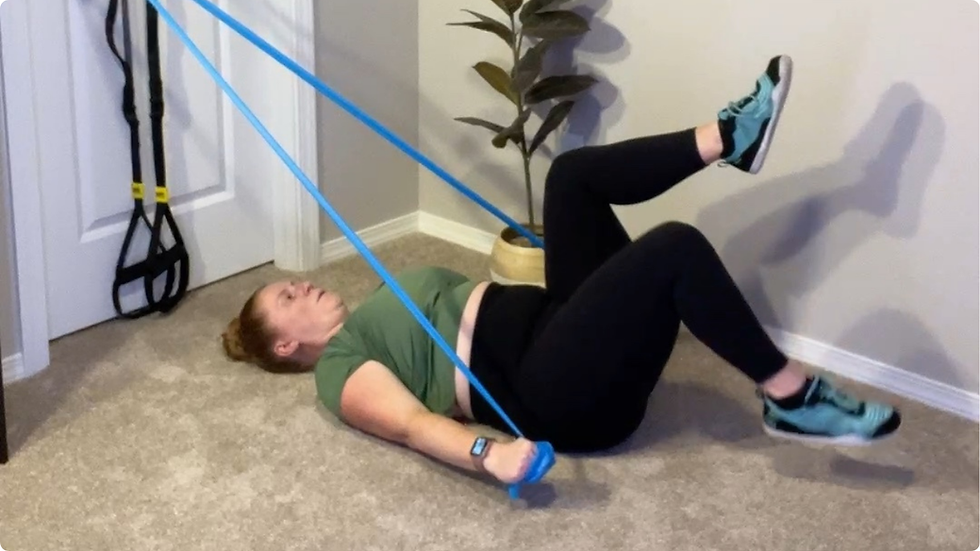
Small, controlled movements
Isometric holds
Breathing and positioning work
And you might think: “How is this going to help?”
But these foundational exercises are where the real change happens.
They help your body learn:
Where your joints are in space (proprioception)
How to stabilize without overcompensating
How to reduce strain on already overworked muscles
It’s Not Just About Muscles
With EDS, we also have to consider:
The nervous system
Fatigue levels
Pain sensitivity
Past injuries or subluxations
So your care should feel more like a full-body, whole-system approach and not just a list of exercises.
Some days will look different than others, and that’s okay.

Progress May Look Different (and That’s Normal)
Progress with EDS isn’t always linear.
You might have:
Good days and flare days
Times where things feel easier, then harder again
That doesn’t mean you’re doing anything wrong.
In fact, learning how to navigate those fluctuations is a key part of the process.

You Should Feel Heard and Understood
This one matters more than anything.
You deserve a provider who:
Listens to your experience
Believes your symptoms
Adjusts your plan based on how your body responds
You shouldn’t feel dismissed, rushed, or like you have to prove your pain.

The Goal Isn’t Perfection—It’s Support
The goal of physical therapy for EDS isn’t to “fix” your body.
It’s to help you:
Feel more stable
Move with more confidence
Reduce pain and flare-ups
Trust your body a little more
Final Thoughts
If physical therapy hasn’t worked for you in the past, it doesn’t mean it can’t work.
It may just mean you haven’t had the right approach yet.
EDS requires a different lens, a different pace, and a different kind of care.
And when it’s done right, it can be a powerful tool in helping you feel more at home in your body again.
If you’re curious whether this kind of approach would be a good fit for you, I’m always happy to talk through your experience and answer questions.

Navigating womanhood and it’s not something you should have to do alone. I work with women across many seasons, including pregnancy, postpartum, pregnancy loss, infertility, trying to conceive, and those living with hypermobility or Ehlers-Danlos Syndrome. My approach blends education, movement, and individualized care so you feel informed, supported, and confident in your body again. If this post resonated with you, feel free to share it with someone who might need it. With advanced training in women’s health, pregnancy and postpartum fitness, and hypermobility-informed care, I help answer the questions that are often dismissed or left unanswered and guide women toward movement that truly meets them where they are.
Thanks!
-Stay Strong.
Jessica Shiyomura, PT, DPT
Enhanced Physical Therapy & Wellness


Comments