
Why Exercise Feels Harder When You’re Hypermobile (And You’re Not Doing It Wrong)

If you’re hypermobile or have Ehlers-Danlos Syndrome (EDS), exercise can feel… confusing.
You might be doing the “right” things (showing up consistently, following programs, listening to your body) and yet movement still feels harder than it seems to for others. You may fatigue faster, feel sore in strange places, or struggle to make steady progress.

If that’s you, I want to be very clear:
You’re not lazy. You’re not broken. And you’re not doing exercise wrong.
Your body simply works differently, and it deserves a different approach.
Let’s talk about why exercise often feels harder with hypermobility, and why that doesn’t mean you’re failing.
Fatigue and Delayed Muscle Response
One of the most common experiences I hear from hypermobile clients is this:
“I want my muscles to kick in… but they feel slow, tired, or uncoordinated.”
Hypermobility affects how your nervous system communicates with your muscles. Because your joints move more than average, your body often relies on passive structures (ligaments, joint capsules) instead of muscle engagement for stability.
The result?
Muscles may activate later than expected
You may feel fatigue earlier in workouts
Movements that look “easy” can feel disproportionately exhausting
This isn’t a motivation issue. It’s a neuromuscular timing issue and it’s incredibly common in hypermobile bodies.
Exercise that emphasizes control, tempo, and awareness helps retrain this system far more effectively than pushing harder or faster.

Joint Instability Is Not the Same as Weakness
Many hypermobile people are told they’re “weak,” when what they’re actually experiencing is instability.
Weakness implies the muscle can’t produce force. Instability means the muscle can’t consistently control the joint through its range.
You can be strong and still feel unstable. You can lift weights and still feel unsafe. You can exercise regularly and still feel like your joints “don’t trust you.”
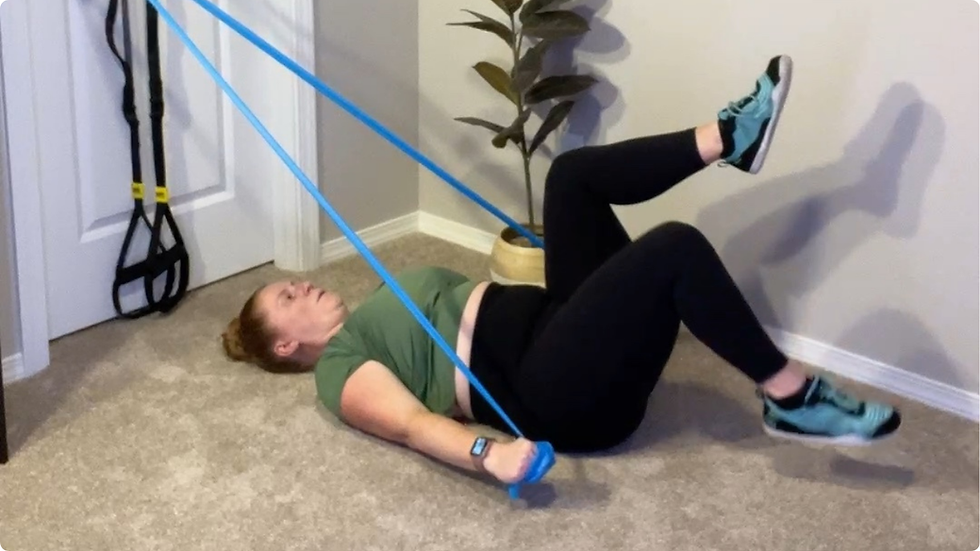
This is why random workouts or generalized fitness programs often fall short. Without joint-specific control and intentional movement, strength doesn’t always translate into stability.
Why Progress Can Feel Slower
Hypermobility requires a different definition of progress.
Instead of:
Bigger weights
Faster reps
More intensity
Progress often looks like:
Better control at end ranges
Less joint pain after movement
Improved confidence in your body
More consistency with fewer flare-ups
Because your nervous system is learning safety and strength at the same time, progress may not follow a straight line. That doesn’t mean it isn’t happening.
Slower progress is still progress — especially when it’s sustainable.

Why Setbacks Don’t Mean Failure
Flare-ups, pain days, or needing to scale back can feel discouraging. But for hypermobile bodies, setbacks are often part of the learning process, not a sign that exercise is harming you.
Your body is constantly adapting to stress, load, hormones, sleep, and life demands. Some weeks will feel strong. Others will feel fragile.
Needing to modify doesn’t erase your work. Resting doesn’t undo your strength. Listening to your body is not quitting.
In fact, adaptability is one of the most important skills hypermobile exercisers can develop.

What This Means for Exercise with Hypermobility
If exercise feels harder for you, it doesn’t mean you need:
More intensity
More discipline
More willpower
It usually means you need:
More intentional strength
More joint-specific control
More nervous-system-aware movement
More consistency with supportive exercises
You don’t need harder workouts — you need the right ones.
If you've tried traditional PT or workout programs that don't work for your body, let's chat. I work to create custom exercise programs for my hypermobile clients to help their bodies have less pain and feel more stable.
Looking for another option?
Check out my Stay Strong Workout Library for workouts to support your hypermobile body.
Movement should build trust with your body, not constantly test it.
If you’re hypermobile and feeling stuck, know this: there is a way to exercise that supports your joints, your nervous system, and your long-term strength — and you deserve access to it.

Navigating womanhood and it’s not something you should have to do alone. I work with women across many seasons, including pregnancy, postpartum, pregnancy loss, infertility, trying to conceive, and those living with hypermobility or Ehlers-Danlos Syndrome. My approach blends education, movement, and individualized care so you feel informed, supported, and confident in your body again. If this post resonated with you, feel free to share it with someone who might need it. With advanced training in women’s health, pregnancy and postpartum fitness, and hypermobility-informed care, I help answer the questions that are often dismissed or left unanswered and guide women toward movement that truly meets them where they are.
Thanks!
-Stay Strong.
Jessica Shiyomura, PT, DPT
Enhanced Physical Therapy & Wellness


Comments