
Exercise During IVF: What Changes During Stimulation and Egg Retrieval?

If you’re going through IVF, you’ve probably already realized just how much your normal routine can change with appointments, medications, injections, bloodwork, ultrasounds, and seemingly endless instructions about what you should and shouldn’t do.

And then there’s exercise.
Can you keep lifting weights?
Should you stop running?
Is walking okay?
When do you need to modify your workouts?
When can you get back to your normal routine after egg retrieval?
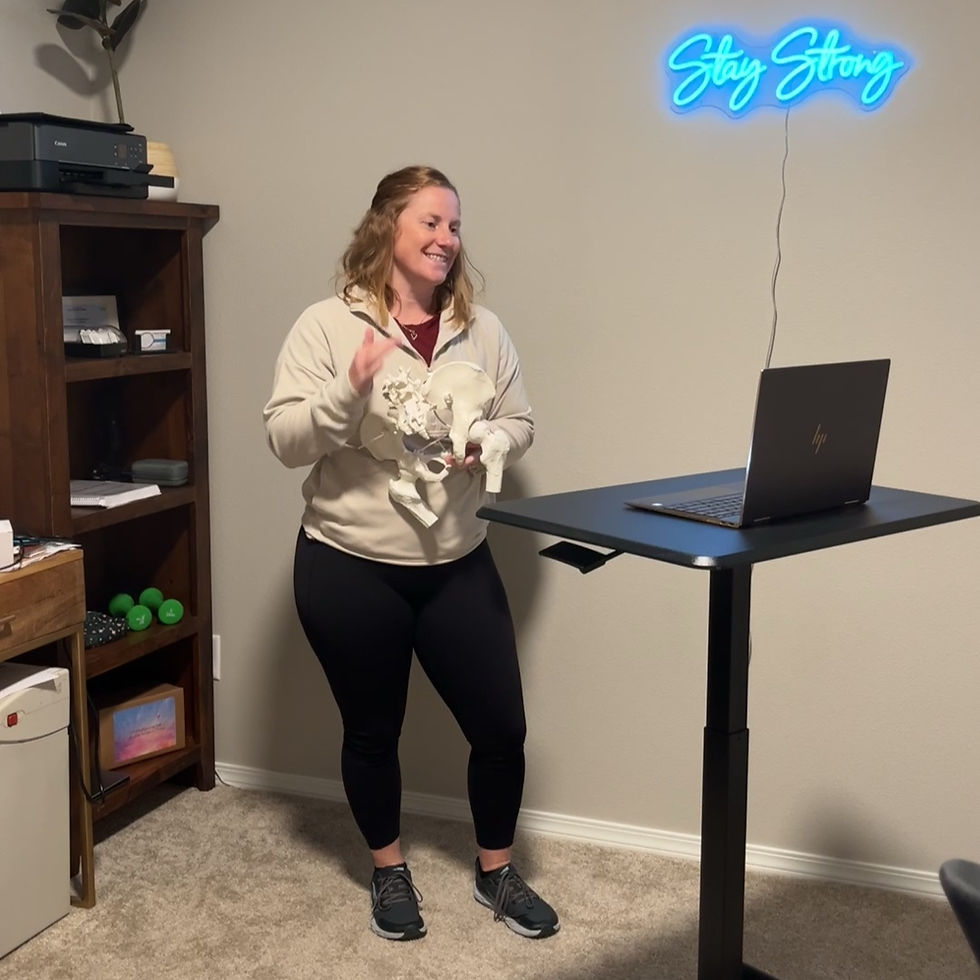
These are questions I talk about as a physical therapist and women’s health and fitness specialist. And recently, they became questions I had to navigate personally as I started IVF myself.
The good news is that starting IVF doesn’t automatically mean you have to stop moving. But as your body changes throughout the process, your exercise routine may need to change with it.
Before IVF Stimulation
Before starting stimulation medications, many people can continue their usual exercise routine unless their fertility provider has given them specific restrictions.
This can be a great time to focus on building a foundation of strength and movement that you can modify as you move through your IVF cycle.
Depending on the person, that might include:
Full-body strength training
Walking
Low-impact cardio
Mobility work
Core strengthening
Pelvic floor exercises
Your usual recreational activities
The goal isn't to suddenly exercise harder because you're preparing for IVF. You don't need to get into the "best shape of your life" before treatment.
Instead, I like to think about maintaining strength and creating a movement routine that can adapt with you. Exercise can be a great way to help bring blood flow to the pelvis and reproductive organs, help you maintain a healthy weight for reproduction, as well as help regulate hormone levels to optimize fertility.
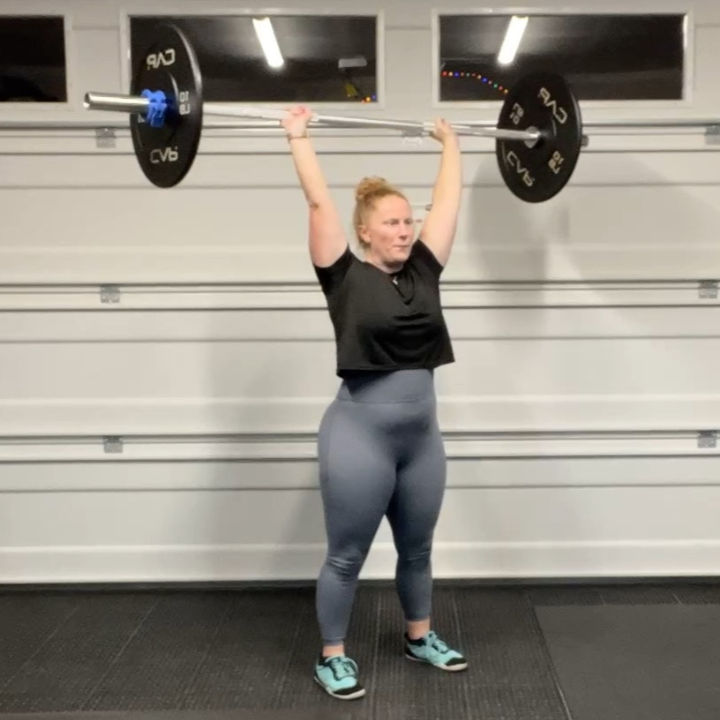
What Changes During IVF Stimulation?
During ovarian stimulation, you're taking medications designed to encourage multiple follicles to develop at the same time. That means your ovaries are doing something very different from what they would during a typical menstrual cycle.
As follicles grow, the ovaries can become significantly enlarged. You may also begin experiencing symptoms such as bloating, pelvic pressure, heaviness, fatigue, or general abdominal discomfort.
This is where exercise recommendations often start to change.
One of the primary concerns during this phase is ovarian torsion, which occurs when an ovary twists around the tissues supporting it. Ovarian stimulation is a recognized risk factor because the ovaries become larger and heavier during treatment.
Your fertility clinic may therefore recommend avoiding higher-impact exercise and movements involving significant bouncing, twisting, or rapid changes in direction as your follicles grow.
And this is important:
Your exercise routine at the beginning of stimulation may look different from your exercise routine several days later.
IVF isn't necessarily a situation where you receive one set of exercise guidelines and follow them for the entire cycle. Your body can change quickly during stimulation.
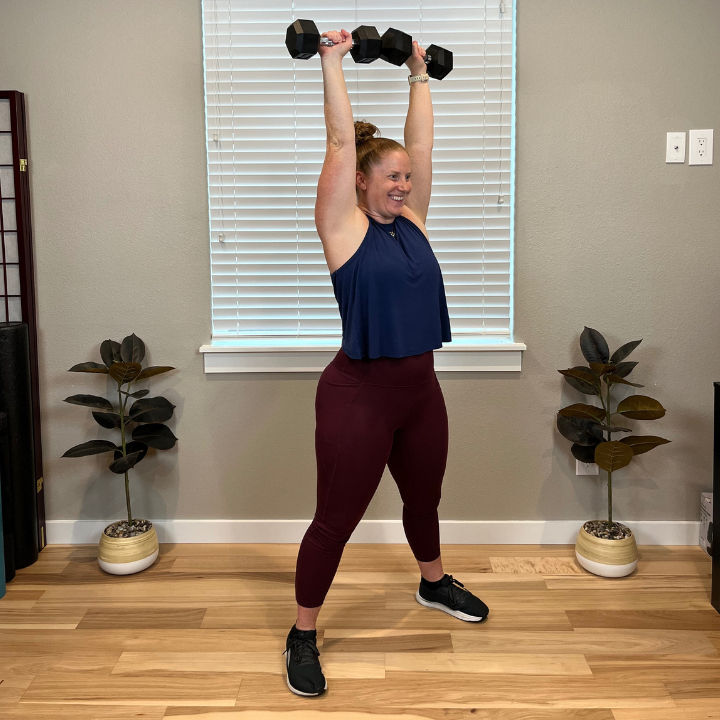
Can You Strength Train During IVF?
Strength training doesn't necessarily have to disappear, but it might look different.
Early in stimulation, some people may still feel comfortable performing a modified version of their normal strength routine.
As the ovaries enlarge, I generally think less about maintaining workout intensity and more about maintaining movement while reducing unnecessary stress through the abdomen and pelvis.
That might mean transitioning toward:
Lighter resistance
Slower, controlled movements
Supported exercises
Shorter workouts
More upper-body work
Gentle lower-body strengthening
Walking and mobility work
Exercises that don't require aggressive twisting or rotation
This is also not the time I would worry about hitting a personal record or progressing your weights. Remember that you're not losing all of your strength because you modify your workouts for a couple of weeks.
Modification is still training.
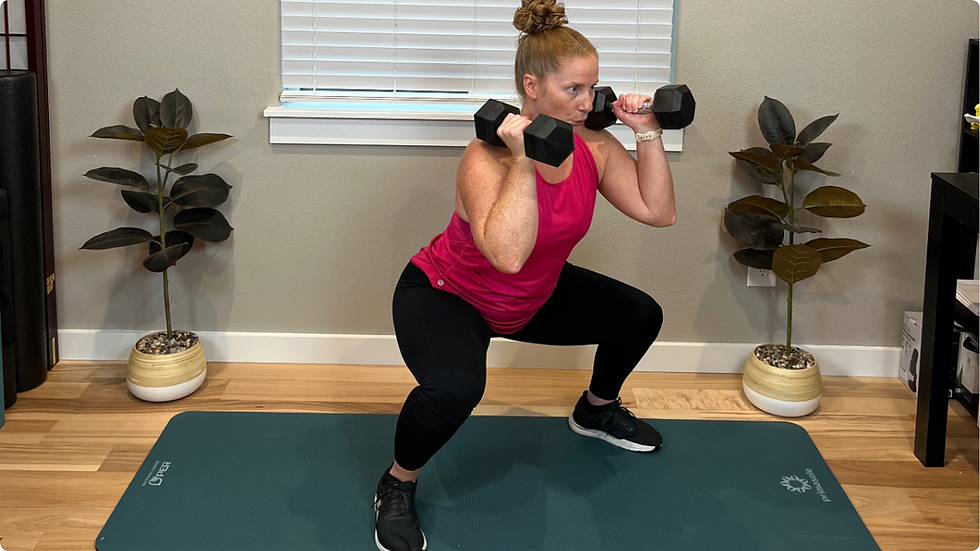
What About Core Exercise?
You don't have to completely forget that your core exists during IVF.
But as your ovaries enlarge and your abdomen becomes uncomfortable, certain exercises may simply stop feeling appropriate.
Instead of intense abdominal exercises or movements requiring a lot of trunk rotation, this can be a good opportunity to focus on breathing, gentle core engagement, posture, and controlled functional movement.
Your core isn't only trained through crunches and planks. It works during many of the movements you perform throughout the day.
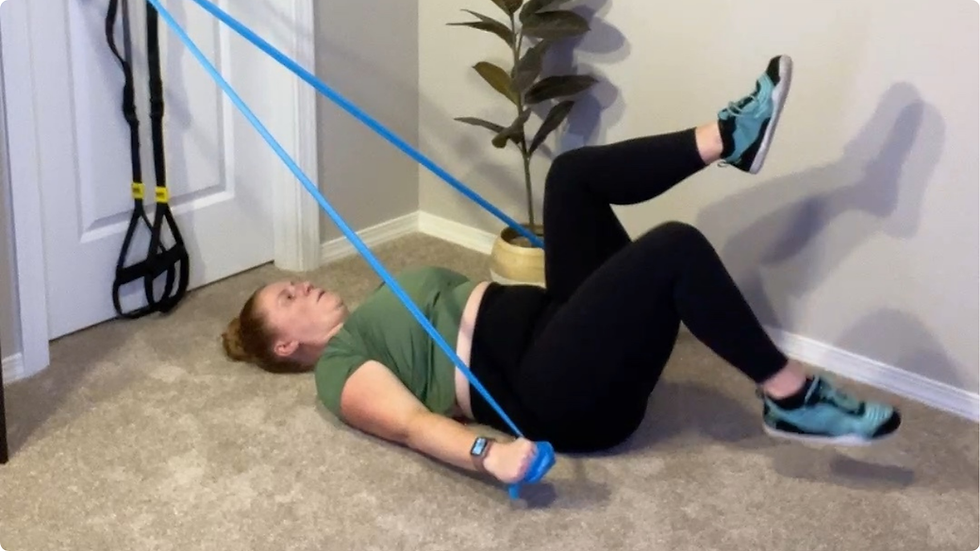
Listen to More Than Just Pain
One thing I encourage people to pay attention to during IVF is their overall response to exercise.
You may notice:
Pelvic heaviness or pressure
Increased bloating
Abdominal discomfort
Fatigue
A feeling of fullness
Changes in bowel movements
Decreased exercise tolerance
You don't have to wait until something hurts before deciding to modify.
If your body suddenly feels very different during a workout, that's useful information.
IVF medications can also affect people differently. Someone else's stimulation experience or their workout routine during IVF doesn't necessarily tell you what yours should look like.

As You Get Closer to Egg Retrieval
As retrieval approaches, your ovaries are typically at their largest, and your fertility clinic may place additional restrictions on exercise.
For many people, this becomes the time to significantly scale back.
Walking and gentle movement may become the main form of exercise, depending on your symptoms and your fertility clinic's recommendations.
And that's okay.
A temporary decrease in training isn't going to erase months or years of strength.
There are seasons when training is about building strength and progressing.
There are also seasons when movement is simply about supporting your body through what it's doing.
IVF stimulation is one of those seasons.

Exercise After Egg Retrieval
Egg retrieval may be a short procedure, but your body doesn't instantly return to its pre-stimulation state afterward.
Your ovaries can remain enlarged for a period of time, and you may experience bloating, cramping, pelvic discomfort, constipation, fatigue, or soreness following the procedure.
This isn't necessarily the time to immediately jump back into your normal workout routine just because retrieval is over.
Instead, think of your return to exercise as a progression.
You might start with short walks and gentle mobility and gradually increase your activity as your symptoms improve and your fertility team clears you to resume more exercise.
The timeline isn't going to look exactly the same for everyone.
How your body responded to stimulation, how many follicles developed, how you feel after retrieval, and whether you develop complications such as ovarian hyperstimulation syndrome (OHSS) can all influence your recovery.
Always follow the specific post-retrieval instructions from your fertility clinic.

What About Exercise Before Embryo Transfer?
If you're doing a frozen embryo transfer, there may be a longer period between retrieval and transfer.
That can give your body time to recover and allow you to gradually return to more of your normal strength training routine before beginning your transfer protocol.
This is another reason I don't look at IVF exercise as one continuous set of restrictions.
There are different phases of IVF and your movement can change with each one.

You Don't Have to Choose Between IVF and Being Strong
Going through fertility treatment can make it feel like your body suddenly belongs to your medication schedule, your ultrasound results, and your fertility clinic.
Movement can be one way to maintain a connection with your body during a process that often feels largely outside of your control.
But movement during IVF doesn't have to mean pushing through symptoms or trying to maintain your exact pre-IVF training routine.
Sometimes strength looks like lifting heavy.
Sometimes it looks like modifying.
And sometimes it looks like taking a walk and allowing your body to recover.
All of those can have a place in an IVF journey.

IVF Strong: Exercise Support Through Every Phase of IVF
This experience is also one of the reasons I created IVF Strong as part of my Stay Strong Workout Library.
IVF Strong provides strength and movement options designed around the different phases of IVF.
Instead of trying to figure out how to modify your workouts every time your IVF protocol changes, you'll have options designed specifically for where you are in the process.
Because IVF already gives you enough things to think about.
Your workout doesn't need to be another one.

Exercise recommendations during IVF should always be individualized. Follow the instructions provided by your fertility specialist, particularly during ovarian stimulation and after egg retrieval. This information is educational and is not a substitute for individualized medical or physical therapy care.
Navigating womanhood and it’s not something you should have to do alone. I work with women across many seasons, including pregnancy, postpartum, pregnancy loss, infertility, trying to conceive, and those living with hypermobility or Ehlers-Danlos Syndrome. My approach blends education, movement, and individualized care so you feel informed, supported, and confident in your body again. If this post resonated with you, feel free to share it with someone who might need it. With advanced training in women’s health, pregnancy and postpartum fitness, and hypermobility-informed care, I help answer the questions that are often dismissed or left unanswered and guide women toward movement that truly meets them where they are.
Thanks!
-Stay Strong.
Jessica Shiyomura, PT, DPT
Enhanced Physical Therapy & Wellness


When exploring ways to grow an Instagram following, Instagram free follower tools can attract attention. But I’m curious—how do you keep engagement meaningful while growing your audience? I’d love to hear what methods others use to reach more people while staying authentic.