
Newly Diagnosed With hEDS? Here’s Where to Start With Exercise

If you’ve recently been diagnosed with hypermobile Ehlers-Danlos syndrome (hEDS), you may have been told that exercise is important.
But how are you supposed to exercise when your joints hurt, your body feels unpredictable, and some exercises seem to make things worse?
For people with hEDS and hypermobility, exercise isn’t about pushing through symptoms or trying to move like everyone else. The goal is to build a body that feels stronger, more supported, and more confident with movement.
Here’s where I recommend starting.

1. Focus on Stabilization, Not More Flexibility
If you're hypermobile, you probably don't need to work very hard to become more flexible.
Instead, your muscles play an important role in helping support and stabilize your joints.
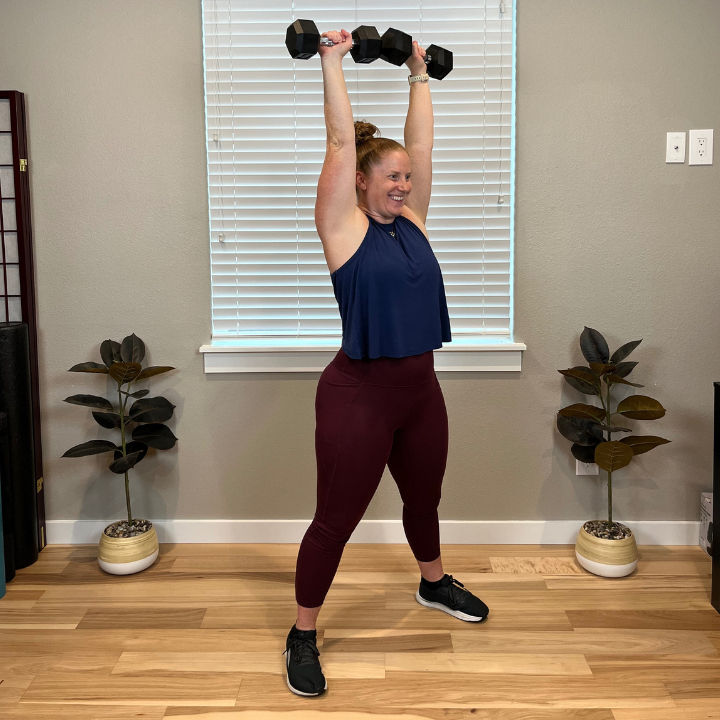
That’s why strengthening your stabilizing muscles is such an important part of exercise with hEDS. Building strength around your shoulders, hips, knees, spine, and other joints can help your body better control the movement you already have.
This doesn't mean you can never stretch. But stretching shouldn't automatically be the answer every time something feels tight. Sometimes that feeling of "tightness" is actually your muscles working overtime to provide stability.
2. Start Smaller Than You Think You Need To
One of the biggest mistakes I see with hEDS is doing too much, too quickly. You have a good day, so you do a big workout. Then your body pays for it for the next few days.
Instead, start with an amount of exercise that you know your body can tolerate and gradually build from there. Your first few workouts might feel easy—and that's okay.
Consistency is much more useful than crushing one workout and needing several days to recover.
3. Control Matters More Than Range of Motion
Just because your joint can move somewhere doesn't necessarily mean you need to exercise through that entire range.
Think about a squat. If your knees tend to hyperextend when you stand, you may need to practice stopping the movement before you "lock out" your knees. The same idea applies to your elbows, shoulders, hips, spine, and other hypermobile joints.
Slowing exercises down and learning to control your movement can be incredibly valuable.
With hEDS, more range isn't usually the goal. Better control of your range is.
4. Don't Ignore Proprioception
Proprioception is your body's ability to know where it is in space. People with hypermobility can sometimes have difficulty sensing exactly where a joint is positioned. You might accidentally lock your knees, hang on your shoulders, or move farther into a position than you realized.
Exercise can help improve that awareness. Slow, controlled strength exercises, balance activities, and exercises that challenge stability can all help your nervous system become better at recognizing and controlling your body's position.
5. Build Your Foundation Before Getting Fancy
You don't need complicated exercises or fancy equipment to start getting stronger.
Some of the basics can be incredibly effective:
Squats or sit-to-stands
Bridge with band
Pallof Press
Shoulder External Rotation
Carries
The specific exercises that are appropriate for you will depend on your symptoms, injuries, joint stability, strength, and current activity level.
The goal isn't to find the "perfect hEDS exercise." It's to find exercises your body can perform well and progressively make them more challenging as you get stronger.
6. Expect Some Fluctuation
With hEDS, your body isn't necessarily going to feel the same every day. Pain, fatigue, sleep, stress, hormonal changes, and other symptoms can affect what you're able to do. That doesn't mean your exercise program isn't working.
Learning how to adjust your workouts instead of completely stopping whenever symptoms increase can be an important part of building a sustainable exercise routine.
Some days might be strength days. Some might be mobility or recovery days. And some days, your biggest win might simply be getting some gentle movement.
You Don't Have to Figure It Out Alone
If you've been diagnosed with hEDS and have been afraid to exercise—or you've tried exercise programs that left you hurting more—you aren't limited to avoiding movement forever.
Exercise can be an incredibly powerful tool for people with hypermobility when it's appropriately modified, progressed, and individualized.
As a physical therapist who works with people with hypermobility and Ehlers-Danlos syndrome, I help clients learn how to exercise in a way that works with their body instead of constantly fighting against it.
If you’re not sure where to start, you don’t have to figure it all out on your own. I have a workout app with strength and movement programs designed with hypermobility in mind, so you can follow along at home and build strength at your own pace.

If you need something more individualized, I also work 1:1 with clients both in person and virtually to help you find exercises that work for your body, modify around painful or unstable joints, and build a plan that helps you feel stronger and more confident with movement.

Whether your goal is to feel more stable, reduce pain, get stronger, return to the gym, or simply feel more confident moving through everyday life, we can start where you are and build from there.
Navigating womanhood and it’s not something you should have to do alone. I work with women across many seasons, including pregnancy, postpartum, pregnancy loss, infertility, trying to conceive, and those living with hypermobility or Ehlers-Danlos Syndrome. My approach blends education, movement, and individualized care so you feel informed, supported, and confident in your body again. If this post resonated with you, feel free to share it with someone who might need it. With advanced training in women’s health, pregnancy and postpartum fitness, and hypermobility-informed care, I help answer the questions that are often dismissed or left unanswered and guide women toward movement that truly meets them where they are.
Thanks!
-Stay Strong.
Jessica Shiyomura, PT, DPT
Enhanced Physical Therapy & Wellness


Comments